Very busy at the moment, so I just wanted to highlight a couple of things via some recently published videos that are worth a look.
Clifton Hill
This one on the Clifton Hill derailment is quite good at explaining what is known so far.
You will note criticism of the media coverage, which I took part in, and I’ll take that on the chin.
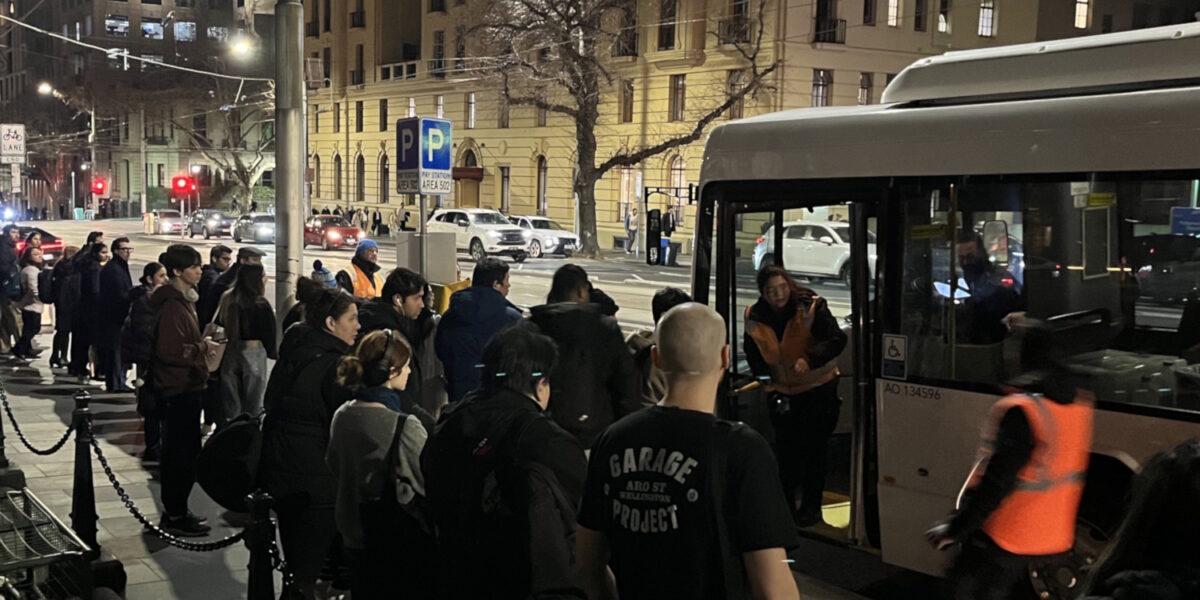
The reason for doing media on this was to highlight the issues for passengers, the inadequate (especially at first) replacement buses, the confusing information.
And then there’s the prospect of compensation. In the end, nothing was committed to beyond the standard monthly performance compensation. This has multiple problems: it’s based on a network wide average so it may not even happen. If it does, most people are not eligible. And even fewer will bother to apply.
My view is that at the very least they should have given full refunds to anybody who travelled on the affected lines on the affected days, including extending all Passes by a week.
Some in the media were more interested in the incident itself, so when providing a bunch of comments about passenger impacts but also responding to a question about the incident context (it’s on a curve on an 1880s alignment* near the site of a 2016 derailment), guess what mostly got into the edited stories? Not surprising I suppose. Oh well.
*The alignment is that old, but not the track or other equipment. A curve with a 40 limit isn’t ideal, but what’s more important is how well it’s maintained.
So what was the actual cause? As the video says, probably multiple factors, but the investigation will get to the bottom of it.
On the bright side, issues with buses and the extremely slow evacuation of the train (3 hours!) were fed back directly to Metro, and this interview with ABC Radio (starts at 1h:12m) focussed on passenger impacts, and the lack of compo was highlighted in The Age.
Trams
Also worth your time if you’re up for it: this longer video about trams streetcars in Toronto.
Why is this of particular interest? Because there are a large number of parallels to be drawn between Melbourne’s trams and Toronto’s. Both legacy systems, with problems with accessibility and lack of on-road priority – in both cases due to government unwillingness to inconvenience motorists.
Arguably Toronto is doing worse than Melbourne in some respects, but the measures on Toronto’s King Street – enforcing turns to largely remove through motor traffic without actually banning cars (which is politically very difficult) – is an example of their success. This is something that could be replicated in many streets in Melbourne, with Sydney Road a prime candidate.
This video will hopefully motivate me to finish my blog post in progress about Melbourne’s trams. Despite us having a large network with iconic status, they’re neglected.
Also
Still looking for something to watch?
These with Gareth Dennis (UK “Rail Natter”) talking to Chris Brownbill (Australian Rail Maps) are worth a look.
Okay the titles are slightly clickbaity IMHO, but basically part one is a look at the history of Australian rail…
…and part two is about where things are going.
Both of these are also available in podcast/audio form if that’s your preference.

7 replies on “How to spend time on YouTube”
Hmm, I saw the video ‘Australia is getting it right’ show up as a suggested video to watch. I saved it in my head.
I only travelled on one Toronto street car, and it travelled unhindered by traffic, but I’ve learnt there is bad traffic congestion that affects the system.
Stuck on a train for three hours is absurd. There is no wonder people take matters into their own hands and force their way out a stranded vehicle.
A couple of free days of travel on the Hurstbridge and Mernda lines would be a decent compensation.
The derailed carriage to me didn’t seem to be on the curve itself, but I have little knowledge.
My question is why couldn’t they run trains to Preston and then run express busses down Bell St to connect with trains at Coburg station? If you can’t terminate trains at Preston then run busses from Reservoir. This would’ve made life so much easier for passengers and freed up busses for extra services stopping all stations.
If there was capacity problems for Upfield trains at peak periods they could’ve at least run connecting busses off peak and on weekends.
I also wanted to highlight that the 902 should be re routed slightly to stop on Sydney Rd in front of Gowrie station or the 901 should skip Roxburgh park and run down Barry rd and pass Upfield station.
Every time the Craigieburn, Upfield and Mernda lines have replacement busses running is a missed opportunity where express services could be redirected to nearby active rail lines and make commuters journeys much easer.
@Jordan, unfortunately there’s nowhere between Clifton Hill and Reservoir that trains can be terminated.
They’ve sometimes run cross-line buses during rail shut downs… sometimes Frankston line passengers have buses to the Sandringham line. Sometimes Dandenong line passengers get taken to the Glen Waverley line.
But to my mind it’s rarer in the north and west, despite the three main lines to the north (Craigieburn, Upfield, Mernda) not being too far from each other. It may relate more to the scope to add additional services on those lines, which is currently limited.
From what I heard of Toronto’s tram system, unlike our road rules, when a street-running tram stops, there’s no compulsion for the cars to stop when passengers need to get on or off.
@Arfman, there is a rule. Whether motorists follow it is a different matter!
“Anyone sharing Toronto roads with streetcars, regardless of their mode of transportation, is subject to the Highway Traffic Act, which makes it illegal to pass open doors.”
https://www.ttc.ca/news/2025/June/TTC-launches-streetcar-safety-campaign-to-remind-motorists-that-Stopping-Saves-Lives
…This also mentions they’re working on automated camera enforcement.
Meanwhile in Melbourne, PTV puts the onus on tram passengers to watch out for traffic via electronic announcements inside the trams, contrary to the road rules.
@Heihachi_73, I think context is important.
There are repeated education campaigns telling motorists to stop for trams, as well as signage on most trams (the signs that stick out on the Z, A and B class are excellent… the LED signage on the E class trams is okay… C and D class I’m less sure about).
But motorists keep ignoring all of this, so I don’t think it’s unreasonable to warn passengers about it.
In contrast lots of off-street car parks have signage around the entrances telling pedestrians “Beware of cars” – but zero signage reminding motorists of their legal obligation to give way to pedestrians. That is way less defensible.