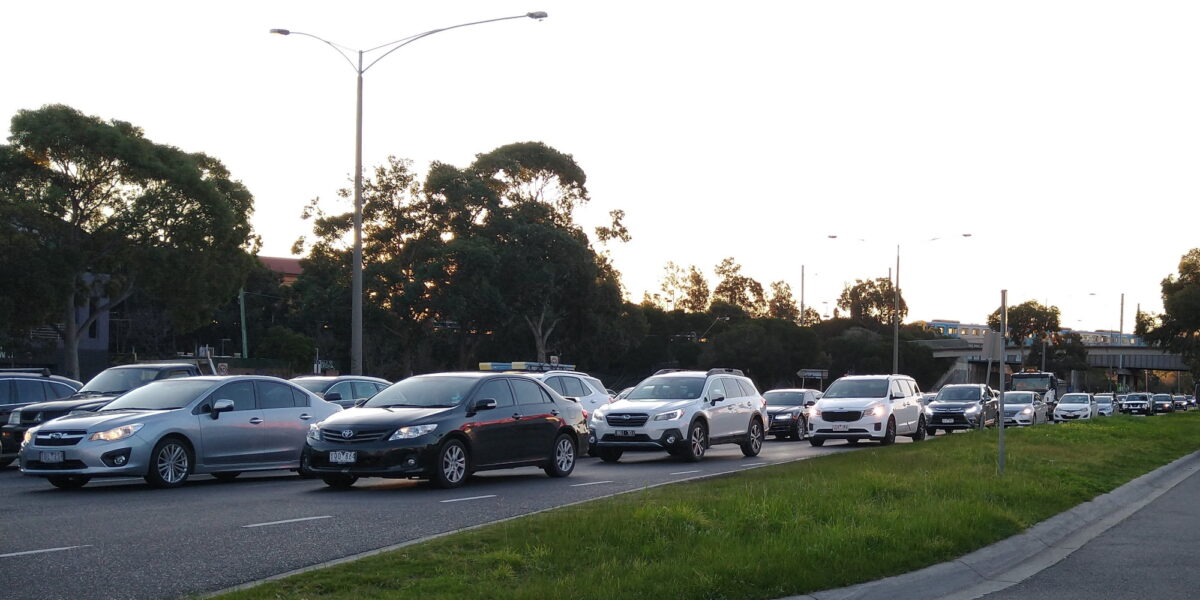
Yes, I still have a car, the same one I bought in 2018, used for trips not convenient by PT, including about half-a-dozen trips each year into regional areas.
It’s annual service and insurance and rego time, so I can see how much it’s costing me.
Insurance $997.38 – an increase of over $100 from last year, which stings a bit, given I’ve never had to claim. But when I had a quick look at other providers, they were even more expensive. And this is for a cheap car. Fully comprehensive insurance must be astronomical if you have a more expensive car.
Road service $89.95 – I get this through the insurer. Cheaper than RACV, but then again not exactly cheap given I’ve never used it – the car has been very reliable. Another form of insurance I’ve never claimed on, I guess.
Registration $931.80 – up about $20 in the past year. According to Vicroads I’m in a high risk zone, but of course this does not take into account how much I drive – see below.
Service $1745.02 – this was last year’s cost. Hopefully not as high this time, but we’ll see. Not hard to understand that it would increase as the car gets older. Not everybody would choose to pay this every year, but I consider it part of the cost of ensuring reliability, so the car is always available when I need it.
Petrol $839.42 – I’m lucky enough that I generally only have to fill up the car about once a month.
So, excluding depreciation of the vehicle, and tolls, and occasional other expenses such as car wash, the total cost for the past year was $4603.57.
How much have I driven in the past 12 months? About 6500 km, which is roughly half the Australian average (which interestingly, is apparently dropping over time).
So for me that’s a total cost of about 71 cents per kilometre.
But you’ll notice that most of the costs are fixed, which is a reminder that the real savings for family transport expenses are found by being able to own fewer cars.
All these numbers will be highly variable for each household and their car(s) of course.
At some stage I might need to ponder a newer car. But I also keep wondering if I can ditch it and go car-free. My conclusion right now is: not yet, not where I live now, and with the trips I make, not without some severe inconvenience.
But opening up that option for more people is why many of us are in the campaign for better non-car transport options – better walking, better cycling, better public transport.

18 replies on “Car costs”
Some places will give you complimentary roadside assistance with a car service. Have you looked into that?
Are you using a dealer or an independent mechanic for your service? That service cost is incredibly high. Dealers tend to charge like a wounded bull. We have a 10 year old BMW. It’s been flawless, with no issues at all and the service by an independent mechanic (BMW specialist) has been about $400 a year. There’s been an occasional tyre, brake pads and one new battery in that time, but these haven’t added much to the overall cost. Previous car was a BMW, which reached 20 years and 200,000 km before somebody else ran a give way sign and totalled it. It was similarly faultless and cheap to service. I have heard about high costs for Japanese cars but everybody is reluctant to give a figure for what it costs them! Like you, I would prefer not to own one, but public transport is nowhere adequate in Australia so far.
Doing your own oil and filter changes cuts costs.(You might have to buy some ramps and a few hand tools but they are yours for life).The internet is your friend.
I would be surprised if you can’t hire a car for 6 regional trips annually for under $4,600.
If that’s your only necessity for having your own private car.
Maybe if it’s just a money thing. Ditch the car.
@Andrew, good idea! The car originally came with 3 years of roadside assistance.
@Tony, that’s a dealer service, and I’m pretty sure that the 6 year service was a particularly expensive one for this model of car. It’s coming up again and I expect (hope) it won’t be nearly as high.
@Graeme, I could wash the car myself too, but I don’t anymore. I’m time poor.
@Bruce, to clarify, the long distance trips are not the only time I use the car. It usually gets some use on shorter trips each weekend.
But you’re right, if it was just the longer trips, it would be cheaper to hire.
Dealer services are generally a rip off. Independents or the chains such as MyCar do a job just as good. A $249 full service at the aforementioned includes a year of full roadside assistance. Been taking my 11 year old Peugeot there for years. She still hums along without fail.
Have you looked into any of the car share schemes? I haven’t, but maybe they could work out financially better?
The service itself is likely only $200-$250 and the rest would be parts and labour so the cost can really differ depending on on what needs replacing.
As @MalcolmD points out, car share is a valid option. It’s a shame it is not mentioned in this blog.
As an interesting aside, I have just read a LinkedIn post that points out “Areas with more buses made people less likely to sell cars. Nobody expected that result. The reason remains a mystery.” Fascinating.
Is there really a reason you cannot combine e-cargo bike (which should enable carrying another one or two people) with regional rail?
But wrt to disposing of old vehicles, I do not know what to do with a broken-down e-cargo bike. How do I dispose of that?
You’ve assumed you won’t start making trips out of town with your car over time. There were 2 or 3 years where you couldn’t do that because of covid, so it isn’t that long that you’ve had anytime access to a car. Is that enough time to develop interests like bushwalking or country music where you’re making these trips every second weekend or more? I think I remember you saying you grew up in a carless household, so it might take you a while to start thinking differently.
On the other hand, there’s another big standing cost you haven’t counted: storing your car. Maybe you already had parking, so this cost is zero to you. But many people pay much more for housing in order to get the number of car parks they need (and far too many externalise this cost by parking on the street.)
In regards to your roadside assistance it would be wise to read over your breakdown benefits especially as you travel regionally occasionally.
You will find a lot of the optional roadside assistance offered with your insurance or received when your vehicle is serviced will only cover a low amount of towing kilometers (or to the nearest attending town) and offer no major benefits such as overnight accommodation if your stuck regionally for a few days waiting on repairs, hire car benefit to get you home or complete towing recovery back to your mechanic in Melbourne etc.
If your vehicle never leaves Melbourne the basic coverage will be sufficient but if you have a major breakdown regionally you may find yourself stuck in a regional town with the only coverage being a quick call out by the local contracted mechanic and a local tow only.
Compare your benefits with RACV Total care/Ultimate care as the gold standard.
Lots of good comments coming through – thanks! I’d encourage people to think more broadly than my example. What can others do to reduce their car costs? (I’m lucky enough not to be under financial stress from this, but this is an issue for some other people.)
Car share (GoGet specifically) has reached the middle suburbs, but is a bit sparse. I suspect it’s only viable thanks to increased density in suburban centres. In my area there’s a single vehicle available near the railway station.
Car Next Door got bought by Uber, and then shut down. https://www.drive.com.au/news/uber-carshare-launches-after-purchase-of-car-next-door/
Drive Mate (which seems to be the equivalent service now) has quite a few listed in the middle suburbs, seems worth exploring.
Regarding servicing, I’ve thought in the past that dealer servicing is the most convenient (they’re most likely to have any required spare parts on-site) and most likely to protect the value of the car if pondering resale later. But on reflection this latter point may make little difference once the car is a certain age?
Thanks for doing the maths, seems I have very similar driving habits and now I know how much they cost me (not counting an expensive engine replacement saga this year that I choose to block from my memory – however I now feel that my 20+ years of roadside assist have been worth it).
I live near Ormond station so I’m well-serviced by public transport but the majority of my (often short) trips can’t be done by public transport easily or would take significantly longer. I’m willing to accept the cost of owning the car for the convenience it brings.
It’s a shame to see depreciation skipped over. It’s a hidden cost that can easily be in the thousands per year, and makes a big difference in the ‘own’ verses ‘hire/share’ calculations.
@Dan, I hadn’t looked into how to calculate depreciation, as I expect it’s a sliding scale – the old adage of X% of value lost as soon as you collect a new car, then a slower reduction over time, perhaps speeding up at the end.
For the sake of a very rough number, if we assume a car has a 15 year life, then this (cheap model in the grand scheme of things) is costing me roughly $1270 per year in depreciation.
Owning a car is financially borderline for me, but what swings it is the convenience factor. It’s sitting in the driveway, ready to go immediately, no need to book a GoGet, no need to think about public transport or bother with the short walk to the station, no wait for an Uber, etc etc. In dollar terms, I’m probably paying a lot for the convenience, but I don’t think I’m the only one.
An EV changes the conversation a fair bit. Almost no servicing, if you can charge from home your fuel is almost free. EV’s have 20’ish moving parts compared to an ICE’s 2000+ moving parts with high temperature – will last longer than a conventional car. And in the UK they are finding that they just don’t break down like ICE’s.
@Lamb, it’s interesting to see what happens as EVs get cheaper. At present they’re still more expensive to buy than ICEs, but cheaper to run. That’ll change over time.